

How to Pick the Best Paint for Your Outdoor Shed
Why Choosing the Best Paint for Your Outdoor Shed Matters More Than You Think
The best paint for outdoor shed projects is a 100% acrylic latex exterior paint — it flexes with wood as temperatures change, resists moisture and mildew, and lasts anywhere from 3 to 15 years depending on the product and prep work.
Quick answer — top options at a glance:
| Paint | Best For | Protection Lifespan |
|---|---|---|
| Sherwin-Williams Duration | All-around durability | Up to 15 years |
| Zinsser AllCoat Exterior | Self-priming, multi-surface | Up to 15 years |
| Jotun Demidekk Cleantech | Wood and masonry | Up to 12 years |
| Protek Royal Exterior | Rich color, wooden sheds | Up to 5 years |
| Valspar StormCoat | Budget-friendly, cold climates | 3-7 years |
Your shed is exposed to rain, UV rays, frost, and temperature swings every single day. Without the right protective coating, wood breaks down fast — leading to rot, mold, and costly repairs or full replacement.
The good news? The right paint does more than protect. It can transform a weathered eyesore into a genuine garden focal point.
But with hundreds of products on the market — paints, stains, sealers, varnishes — it’s easy to grab the wrong thing. This guide cuts through the noise so you can make a smart, confident choice.
Understanding the Difference Between Shed Paint and Stain
When you stand in the paint aisle, the first big fork in the road is deciding between paint and stain. While both offer protection, they work in completely different ways.
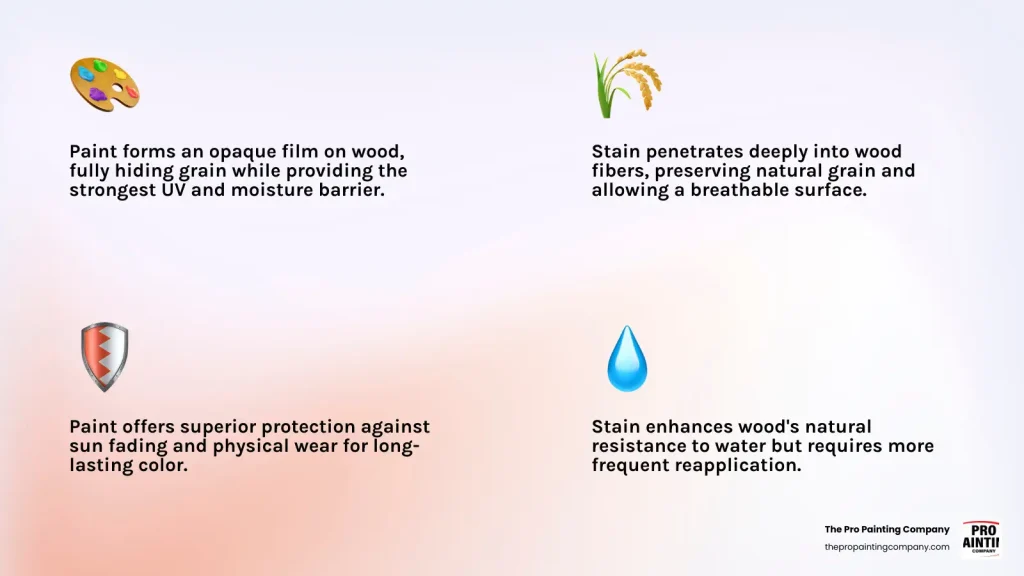
Paint creates an opaque, solid film on top of the wood. It completely hides the wood grain but offers the strongest barrier against UV rays and physical wear. If you want a bold color—like a crisp white or a deep slate grey—paint is your go-to. It acts like a protective “skin” for your shed, blocking out moisture and preventing the sun from bleaching the wood fibers.
Stain, on the other hand, is designed to soak into the wood. Instead of sitting on top, it penetrates the fibers. This allows the natural texture and grain of the timber to show through. Stains come in various levels of opacity, from clear to solid, and they are generally more “breathable,” meaning they allow moisture trapped inside the wood to escape without causing the finish to bubble or peel.
For those looking for more info about deck and fence staining, the principles are very similar to sheds: it’s all about balancing the look you want with the level of maintenance you’re willing to do.
| Property | Exterior Paint | Exterior Wood Stain |
|---|---|---|
| Appearance | Opaque, solid color | Translucent to solid; shows grain |
| UV Protection | Excellent (blocks all light) | Good to Moderate |
| Moisture Barrier | High (creates a film) | Moderate (soaks in) |
| Maintenance | Scrape and repaint | Re-coat without much scraping |
| Lifespan | 5–15 years | 3–7 years |
Selecting the Best Paint for Outdoor Shed Durability
If your goal is maximum longevity and a “set it and forget it” mentality, a high-quality paint is usually the winner. Because paint provides solid coverage, it offers superior mold resistance and mildew protection. This is especially important in the Northeast, where our humid summers and snowy winters in Pittston, PA, can create the perfect breeding ground for fungi.
Modern garden paints like Cuprinol Garden Shades are specifically formulated to be water-based and flexible. They are great for all garden wood, including summerhouses and garden offices, providing a rich color that lasts much longer than traditional cheap emulsions.
When to Choose Exterior Wood Stains
Stains are the right choice when you love the natural look of wood. If you’ve invested in high-quality cedar or redwood, covering it with thick paint might feel like a crime! Semi-transparent options enhance the natural aesthetics while providing essential water repellency.
Breathable coatings are a huge plus for sheds that might have been built with slightly “green” or damp lumber. Since the stain doesn’t form a hard plastic-like shell, it’s less likely to peel if the wood decides to move or release moisture.
Key Factors When Choosing the Best Paint for Outdoor Shed Projects
Picking the best paint for outdoor shed surfaces isn’t just about the color on the lid. You have to consider the “environment” your shed lives in.
- Climate Impact: In Pennsylvania, we deal with “freeze-thaw” cycles. Your shed wood expands when it’s humid and shrinks when it’s freezing. Your paint needs to be “elastic” enough to move with it.
- Sun Exposure: UV rays are the #1 enemy of wood. They break down the lignin that holds wood fibers together. High-pigment paints offer better UV protection than clear sealers.
- Wood Type: Is your shed made of rough sawn timber or smooth planed wood? Rough timber is very porous and will “drink” much more paint—sometimes requiring 50% more product than a smooth surface. However, that extra absorption often leads to a more durable bond.
- Eco-Friendly Options: If your shed is near a vegetable garden or where pets play, look for low-VOC (Volatile Organic Compounds) formulas. These are safer for the environment and have much less of that “new paint” chemical smell.
Why Acrylic Latex is the Best Paint for Outdoor Shed Applications
We almost always recommend 100% acrylic latex for residential exterior painting. Why? Flexibility.
Acrylic resins are incredibly durable and resistant to cracking and peeling. Unlike old-school oil paints that become brittle over time, acrylic stays flexible. This “thermal expansion” capability is vital for outdoor structures. Plus, being water-based means cleanup only requires soap and water—no harsh thinners needed.
Protecting Against Rot, Mold, and UV Damage
A shed is essentially a wooden box sitting in the dirt. To keep it from rotting, your paint should contain fungicidal agents. If you notice green or black spots on your shed before painting, you must use a mould and algae remover to kill the spores at the root. If you just paint over mold, it will grow through the new layer.
Another hidden enemy is “tannin bleeding.” Woods like cedar and redwood have natural oils (tannins) that can seep through white or light-colored paint, leaving ugly brown stains. A high-quality primer or a paint with tannin-blocking properties is essential to keep your shed looking fresh.
Top-Rated Paint Brands and Formulas for Maximum Protection
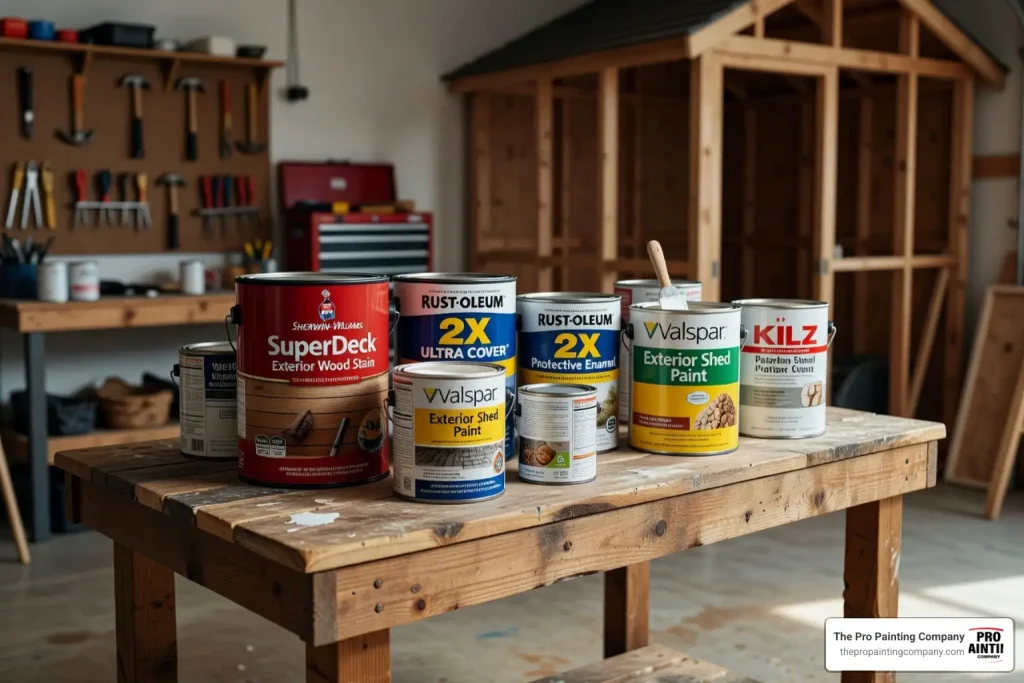
When it comes to the best paint for outdoor shed longevity, you usually get what you pay for. Here are the heavy hitters we trust:
- Sherwin-Williams Duration: This is a premium choice for a reason. It features PermaLast® technology, which creates a thicker, more durable coating than standard paints. It’s self-priming, meaning on repaints, you can often get away with a single coat. It even comes with a lifetime limited warranty against peeling and blistering.
- Zinsser AllCoat Exterior: A fantastic multi-surface paint that can offer up to 15 years of protection. It is famous for being “scrubbable” and resisting fungal degradation.
- Jotun Demidekk Cleantech: If your shed has a masonry base or you want a finish that looks “just painted” for a decade, this is a top-tier European technology that provides up to 12 years of performance.
- Protek Royal Exterior: This is a water-based, joinery-grade paint. It’s ideal for those who want a huge range of trendy colors with a high-quality finish that lasts about 5 years.
- Valspar Weathershield: Found at big-box stores like Lowe’s, this offers Rain-Ready Technology™, allowing you to paint even if rain is in the forecast for later that day (it can be rain-ready in just 1.5 hours!).
Step-By-Step Guide to Preparing and Painting Your Shed
Preparation is 90% of a professional paint job. If you skip the prep, even the most expensive paint in the world will peel within a year.
- Clean the Surface: Use pressure washing to remove dirt, cobwebs, and loose wood fibers. Be careful not to gouge the wood with too much pressure.
- Scrape and Sand: Remove any flaking paint from previous years. Sanding the “grayed” weathered wood back to a fresh tan color helps the paint adhere.
- Repair and Caulk: Fill holes with exterior wood filler. Use a high-quality exterior caulk to seal seams around doors, windows, and corners. This prevents moisture from getting behind the wood.
- Check the Weather: Ideally, you want a dry day between 50°F and 85°F. Some modern paints like Sherwin-Williams Duration can be applied as low as 35°F, which is great for the Pittston, PA, spring and fall seasons.
- Prime: If you are painting bare wood or a drastic color change, use a dedicated exterior primer. It seals the wood and provides a “velcro” surface for the paint to stick to.
How to Paint an Old or Weathered Shed
Old sheds require a bit of “tough love.” If the wood is very weathered, it will be incredibly thirsty.
- Kill the Spores: Use a fungicidal wash to ensure no mold is hiding in the cracks.
- Structural Check: If a board is soft enough to poke a screwdriver through, it’s rotted. Replace it before painting.
- The “Brush-First” Method: While a sprayer is fast, for an old shed, we recommend “back-brushing.” This means you spray the paint on, then immediately use a brush to push the paint into the deep cracks and pores of the wood.
Choosing the Right Colors and Sheens for Your Garden Building
The color you choose can actually affect the temperature inside your shed!
- Popular Colors:
- Anthracite Grey & Slate: Modern, sleek, and hides dirt incredibly well.
- Willow Green: Blends perfectly into a lush garden.
- Coastal Blue: Gives a “beach hut” or “summer cottage” vibe.
- Barn Red: A classic look that provides a beautiful contrast against green grass.
- White: Looks clean and high-end, but shows every speck of dirt and can be prone to showing tannin stains.
Heat Absorption: Darker colors have a lower Light Reflectance Value (LRV). They absorb more heat, which can make a shed quite hot in the summer. If you use your shed as a workshop or office, consider lighter shades to keep things cool.
Selecting the Ideal Sheen: Flat, Satin, or Gloss
- Flat/Matte: Excellent at hiding imperfections in old, bumpy wood. However, it’s harder to clean and can hold onto dirt.
- Satin/Eggshell: The “Goldilocks” of sheens. It has a slight luster that looks rich, is easy to wipe down, and handles the elements well. Most professionals choose Satin for the main body of the shed.
- Semi-Gloss/Gloss: Best reserved for trim, doors, and window frames. The higher the gloss, the more durable the finish, but it will highlight every single dent or scratch in the wood.
Maintenance and Longevity: How Long Does Shed Paint Last?
A high-quality paint job on a shed should last between 3 to 10 years, while premium products like Sherwin-Williams Duration can push that to 15 years.
To make your investment last:
- Annual Inspections: Every spring, walk around the shed. Look for “alligatoring” (cracking) or areas where the paint has thinned.
- Touch-Ups: If you see a small chip, fix it immediately. This prevents water from getting under the paint film and starting a larger peel.
- Keep it Clean: Gently wash your shed once a year with a garden hose and a soft brush to remove bird droppings and pollen, which can degrade the paint over time.
Frequently Asked Questions about Shed Painting
Do I need to use a primer before painting my shed?
Yes, in most cases. While some paints are “self-priming,” a dedicated primer is better for bare wood, resinous knots, or when switching from an old oil-based paint to a new water-based one. It ensures a uniform finish and prevents “bleed-through.”
Can I use interior paint on an outdoor shed?
Absolutely not. Interior paint is designed to be rigid and scrubbable, but it lacks the UV inhibitors and flexible resins needed to survive outdoors. It will crack and peel within months of being exposed to the sun and rain.
How many coats of paint does a wooden shed require?
We always recommend two coats. The first coat seals the surface, while the second coat provides the actual color depth and weather protection. On rough-sawn timber, you might even find that a third coat is needed to get a completely solid look.
Conclusion
Choosing the best paint for outdoor shed protection is the difference between a structure that lasts a lifetime and one that rots away in five years. By selecting a high-quality 100% acrylic latex paint, preparing the surface meticulously, and choosing a color that fits your landscape, you’re protecting your investment and boosting your home’s curb appeal.
At The Pro Painting Company, we bring over 100 years of combined team experience to every project. Whether you need help with a backyard shed or a full Residential Exterior Painting project, our experts in Pittston, PA, use only premium materials and provide a 2-year warranty for your peace of mind.
Ready to give your shed the professional touch it deserves? Request exterior painting services from us today!